Urban
The Caine MutinyUrban is a signalman aboard the USS Caine whose small but consequential role links the ship’s command crisis to Steve Maryk’s court-martial. He is present in the wheelhouse when danger emerges close ahead, and later gives testimony about who was there when Philip Francis Queeg was relieved. The narrative shows him under acute pressure, but offers only a narrow view of his life beyond those moments.
Identity and Shipboard Role
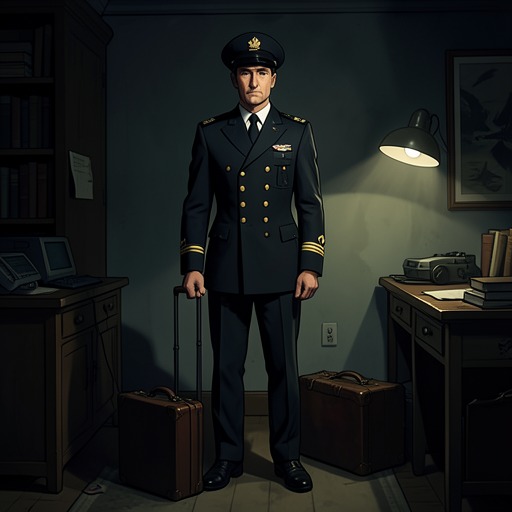
Urban is identified as a signalman. His duties also included keeping the quartermaster’s notebook, a routine responsibility that later helps establish his place in the wheelhouse during the transfer of command. The evidence does not provide a fuller account of his background or his regular relationships with the other crewmen.
The Wheelhouse Crisis
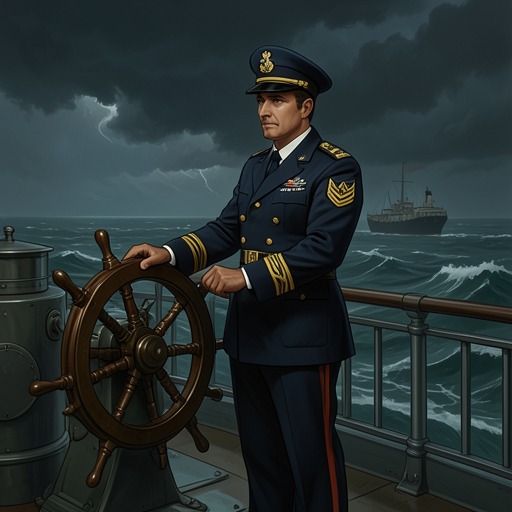
As the ship struggles to come around, Urban drops to his knees, hugs the binnacle, and cries out in a wailing voice. Steve Maryk sharply orders him to stand. The episode makes Urban’s fear visible through his physical actions, while the ship’s immediate demands continue around him: Stilwell calls out the heading, and the crew works to bring the vessel around.
A short time later, Stilwell reports something close ahead, possibly a ship. Maryk turns to the windows and takes urgent action at the engine and rudder controls. Urban’s earlier panic occurs within the same perilous sequence, but the account does not state what he does during this later sighting.
Witness at Maryk’s Trial
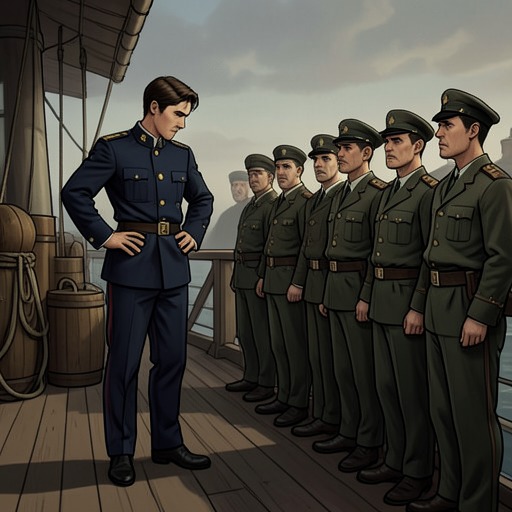
At the trial, Urban is called as a witness for Challee. His right hand trembles when he is sworn in, and his voice quavers. He establishes that he was the only person in the wheelhouse besides Philip Francis Queeg, Steve Maryk, Willie Keith, and Stilwell when Queeg was relieved. Asked about his duties, he identifies the quartermaster’s notebook as his responsibility.
When Greenwald asks where Queeg is, Urban answers that Captain White has the ship. The answer locates the command change in its aftermath; Urban’s wary, sullen expression accompanies it. His testimony in the supplied account establishes his presence and duty, but does not disclose the substance of any further evidence he may have given.
Narrative Significance
Urban’s two appearances frame him as a minor enlisted crewman caught between immediate danger and formal scrutiny. In the wheelhouse, fear briefly overwhelms his composure; in court, trembling and a guarded expression mark the strain of being made a witness. The contrast makes his limited role concrete without turning him into a spokesman for the crew or assigning him motives the narrative does not establish.